Every vendor’s models are still improving fast. What ordinary users notice is the knowledge and reasoning; what frontier researchers watch is the intelligence ceiling, whether AI can reach AGI (artificial general intelligence).
For my work, though, the most useful thing is not how strong its brain is, but that it can already handle the hand-eye coordination of the digital world, and the operations that come with it. Most people treat AI as a consultant on the internet, or some other role they chat with; what I do is treat it as an intern and a contractor, and bring it to the place where I actually need the work done.
Even if AI’s brain were roughly equal to mine, or slightly worse, it would still be better suited than me to work in the digital world, because its reading speed and typing speed are far beyond a human’s.
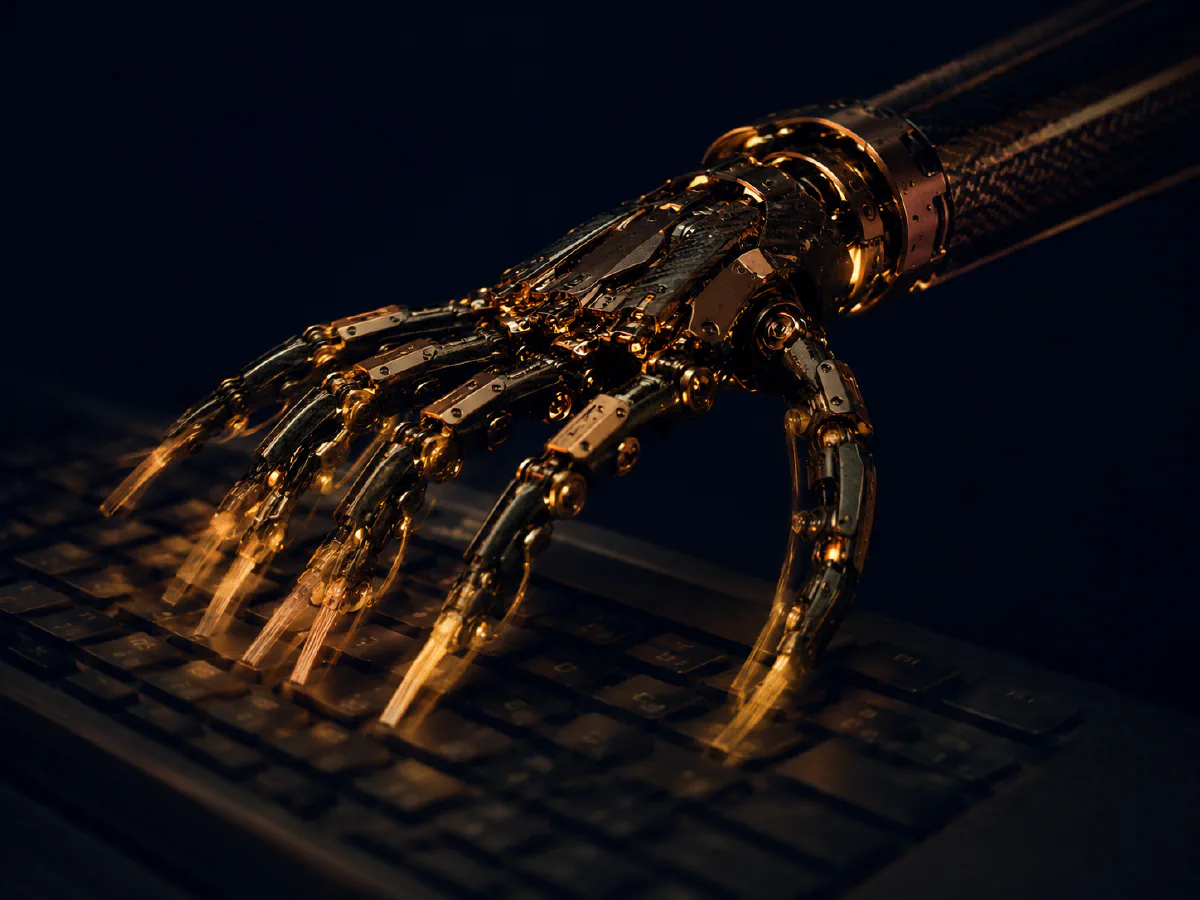
In the digital world, rather than a replacement brain, it is more like a prosthesis for the hands and eyes.
This point rarely gets mentioned, yet it is where I have actually benefited most. While everyone is still arguing about AI’s ability to think, its eyes and hands have already saved me a great deal of time.
Two examples.
Example one: iterative work#
Say there are a few dozen machines to log into and check disk usage. I can write a script for that; even before AI it was not especially slow.
But I still have to list exactly which machines; if three of them cannot be reached, the process gets interrupted at least three times; and in between there are many small actions that cost humans a lot of time, switching windows, tidying the list, copy-pasting, and so on, while keeping an eye on the screen for anything going wrong.
There is not much technical content in any of this; it is slow mainly because we do not have a brain-computer interface yet, and between human thinking and the computer’s input and output there is far too much reading and copy-pasting.
In this situation AI is mainly a prosthesis for my hands and eyes; the brain just happens to be outsourced along the way.
Example two: short-term memory#
Sometimes our resources have many relationships to people, events, times, places and things: equipment, goods, customers, vendors, dates, what was done about them, and so on. When these need filing, or their relationships need untangling, a person has to commit fully, hold the relevant information in their head, and turn it into something that is easy to recall and handle later.
Along the way we keep switching tabs and windows with hand-eye coordination, our eyes keep refocusing, and we often have to type as well, which drains short-term memory and attention, the two most precious resources we have.
If the environment lets you work quietly it is bearable; in some settings a message or a phone call cuts in and the task just keeps getting postponed.
This is exactly the kind of work AI is best at. It can edit Excel and text files; if you are worried about a file getting broken, copy it, hand the copy over, and watch how it does.
So my role changed#
Once hands and eyes are outsourced, what I do shifts from executing to reviewing. That does not mean it got easier; the concentration reviewing takes is badly underestimated. But for me it is still a worthwhile trade, because judgement stays with me while reading and typing go to the AI that is better at them, so each side does what it is good at.
Ghost in the Shell imagined this scene long ago:
Further reading: I said “from executing to reviewing” quickly above, but the fatigue of reviewing is the real price of this trade. Infinite Interns takes it apart in full →
If you also have a pile of digital chores that have “no technical content at all, but just take time”, switching windows, matching lists, copy-pasting, staring at output and so on, those are exactly the easiest parts to hand over. The same approach can be laid over your workflow. This is the kind of job I take on: scope, pricing, how to start →