

Some work, as long as the AI can run it alone without human intervention, can be handed over whole and left to run, even if it takes four or eight hours. Work of this shape has one more property: it can be copied.
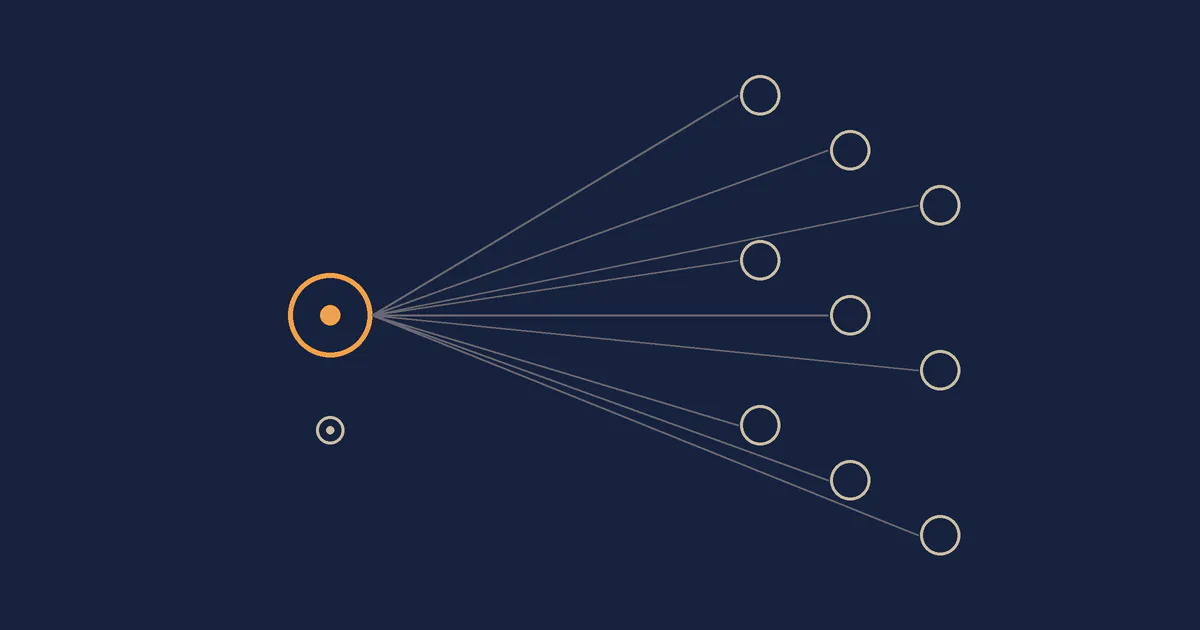
So I can delegate different things in several, or a dozen, different sessions at the same time, as if I could produce new interns or employees at will. I later gave this a nickname: infinite interns.
The phrase sounds lovely, but after using it for a while I found that what it really changed was not so much my output as my job title.
Once the interns multiply, you are no longer the one doing the work#
When ten things are running at once, you cannot possibly still be doing any one of them by hand. Only four things are left for you to do:
- Give instructions correctly
- Supply the information it is missing along the way
- Interrupt it when it goes off course
- Check the results
Taken together, those four things are simply management.
At first AI is more like a prosthesis, an extension of the body, but a prosthesis proliferates. In the end the prosthesis became a double, grew into a team, and I inherited all the good and the bad of leading a team along with it.
The work did not shrink; I promoted myself to reviewer.
The fatigue of reviewing is badly underestimated#
Review fatigue is the thing I most want to talk about and that fewer people do. Less time spent executing does not mean less time working. Just as a manager can look like they are doing nothing, a lot of the work has simply changed into a less visible form.
Each of the four things above takes concentration, and it is not quite the same concentration as doing the work yourself: you have to understand deeply enough to review, yet you have no hands-on process to build confidence from.
There is a further complication. Once much of the work that needs deep focus or flow is handed to AI, what is left for the person is the part that carries responsibility and the part that is most tedious. A large share of the dopamine that used to come from figuring something out and getting it running has been outsourced too; what remains is responsibility and proofreading.
So “open ten at once” is not free#
Infinite interns have a very real ceiling, and it is not on the AI’s side but on yours:
- How many threads of context can you track at once?
- At what minute do you notice one of them has gone off course?
- Can you judge whether a result is right without redoing it?
In my experience the number I can run in parallel steadily is far lower than the number I could technically open. The bottleneck moved from the hands to attention.
This is also why I have always been cautious about the line “AI lets one person do the work of ten”. It lets one person farm out to ten; that is a completely different thing from one person finishing the work of ten, and the difference between them is review capacity.
If you are about to start running things in parallel#
Three things that actually help:
- Open only as many as you can review. Opening ten and glancing at each is the same as doing none.
- Write the acceptance criteria when you delegate, not when you collect. A criterion you only think of afterwards is one it could never have guessed.
- Leave a trail that can be re-run. You will forget what happened in that session three days ago; it won’t, but only if you have it write things down.
Further reading: why work that “can be left to run” compounds, and where the saved time should go. The Watershed Comes After You Save the Time →
If you are handing processes to agents and find yourself chasing ten half-finished pieces every day, the problem is usually not the agent but the spec you delegated with.
Specs are something I can write for you: scope, pricing, how to start →